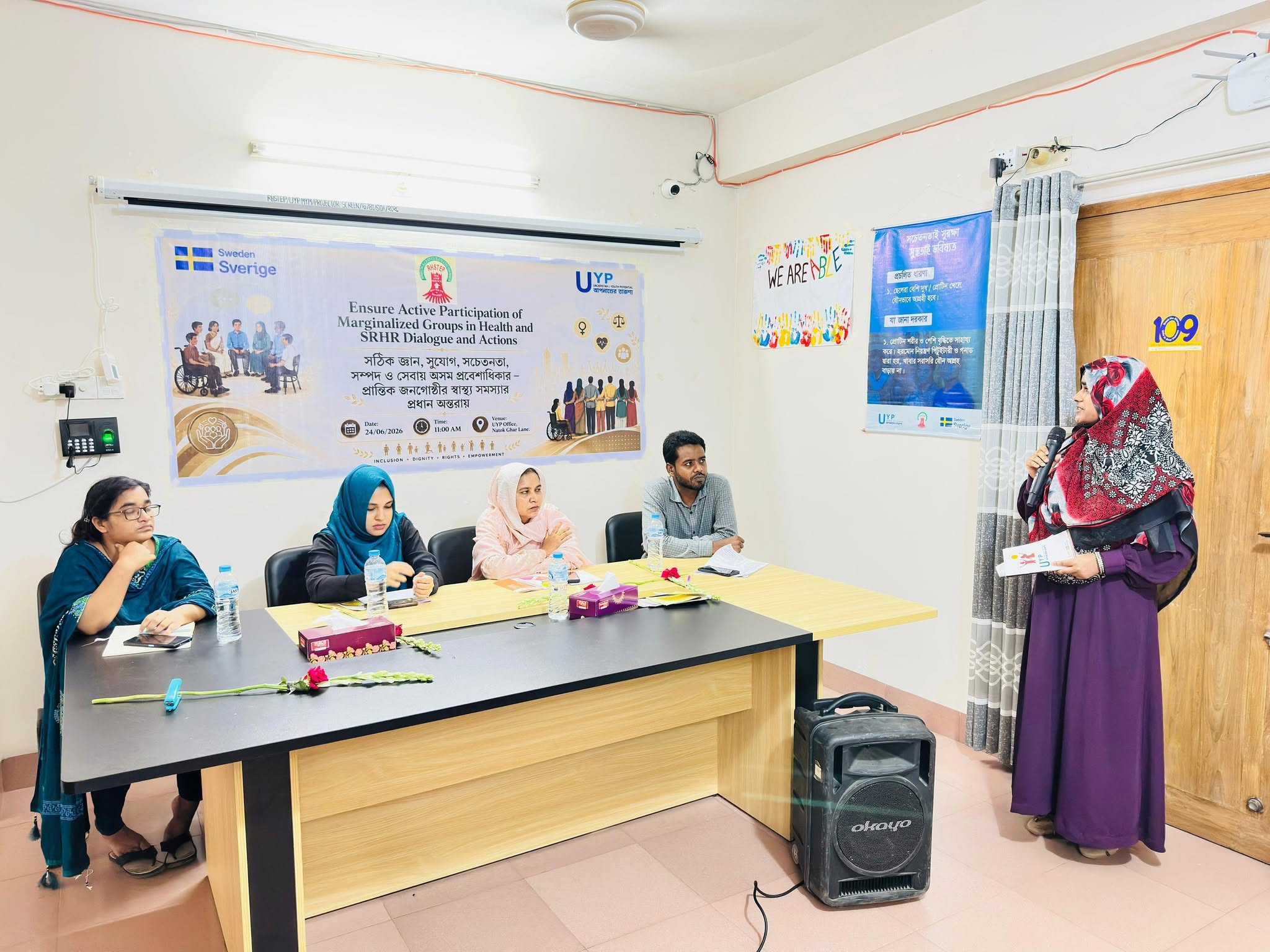
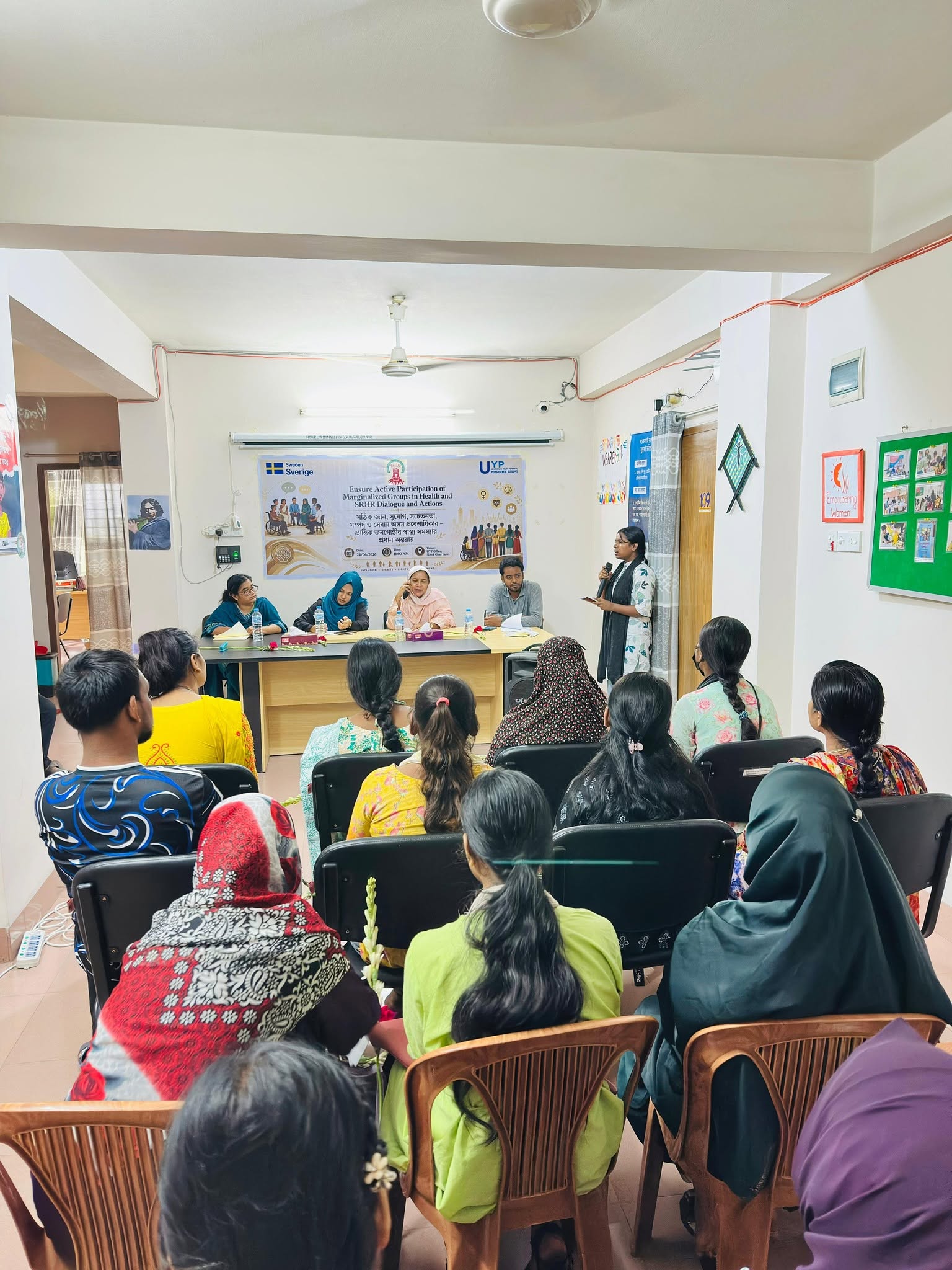
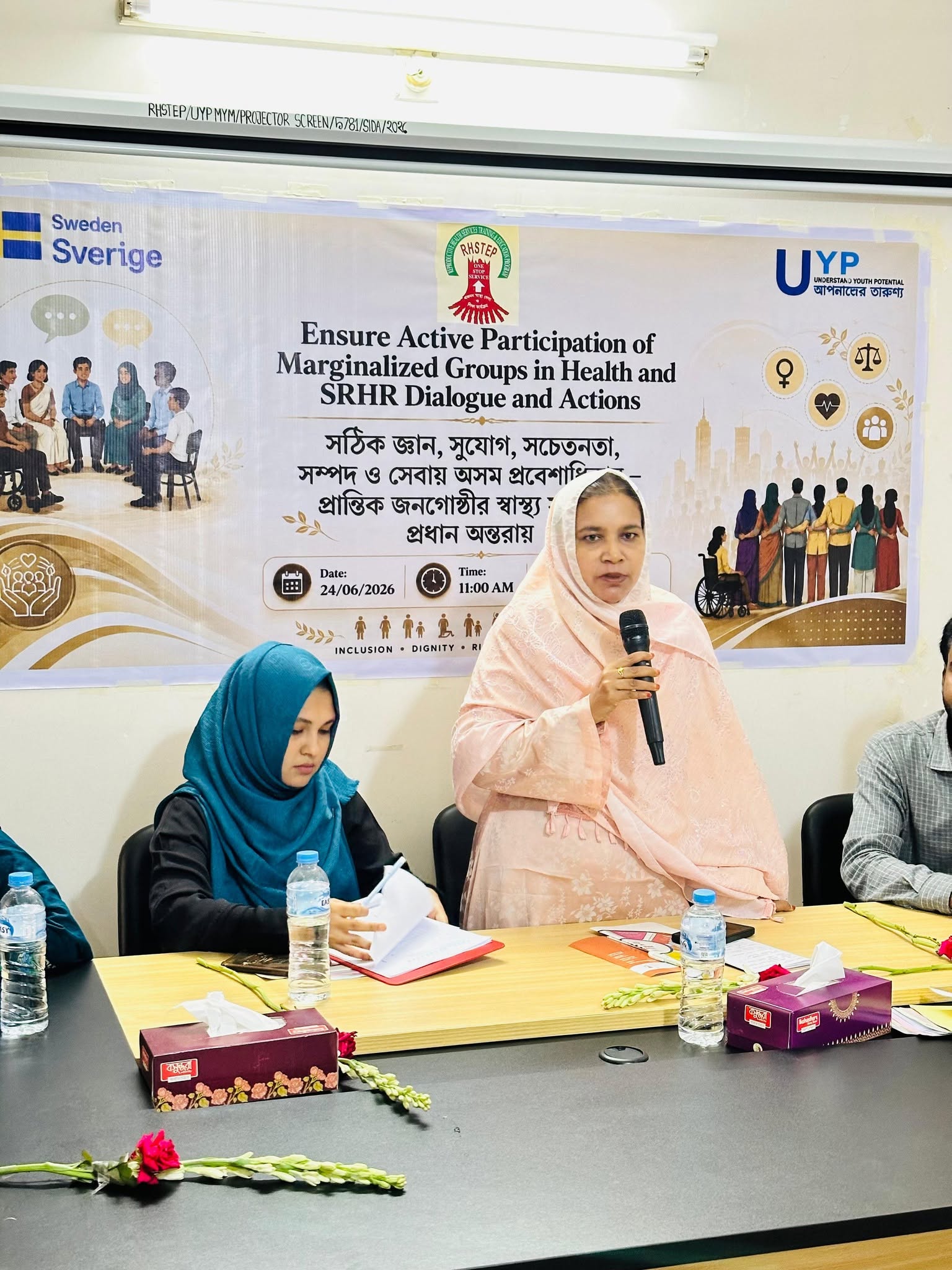
RHSTEP’s Mymensingh UYP (Unlocking Youth Potential) Centre organized the “Active Participation of Marginalized Groups in Health and SRHR Dialogue and Actions – 02” program on 24 June 2026 under the theme, “Limited access to knowledge, opportunities, awareness, resources, and healthcare services remains a major barrier to the health and well-being of marginalized communities.” The initiative aimed to strengthen health rights awareness, promote Sexual and Reproductive Health and Rights (SRHR), and encourage the active participation of marginalized communities in Bangladesh’s ongoing health reform process.
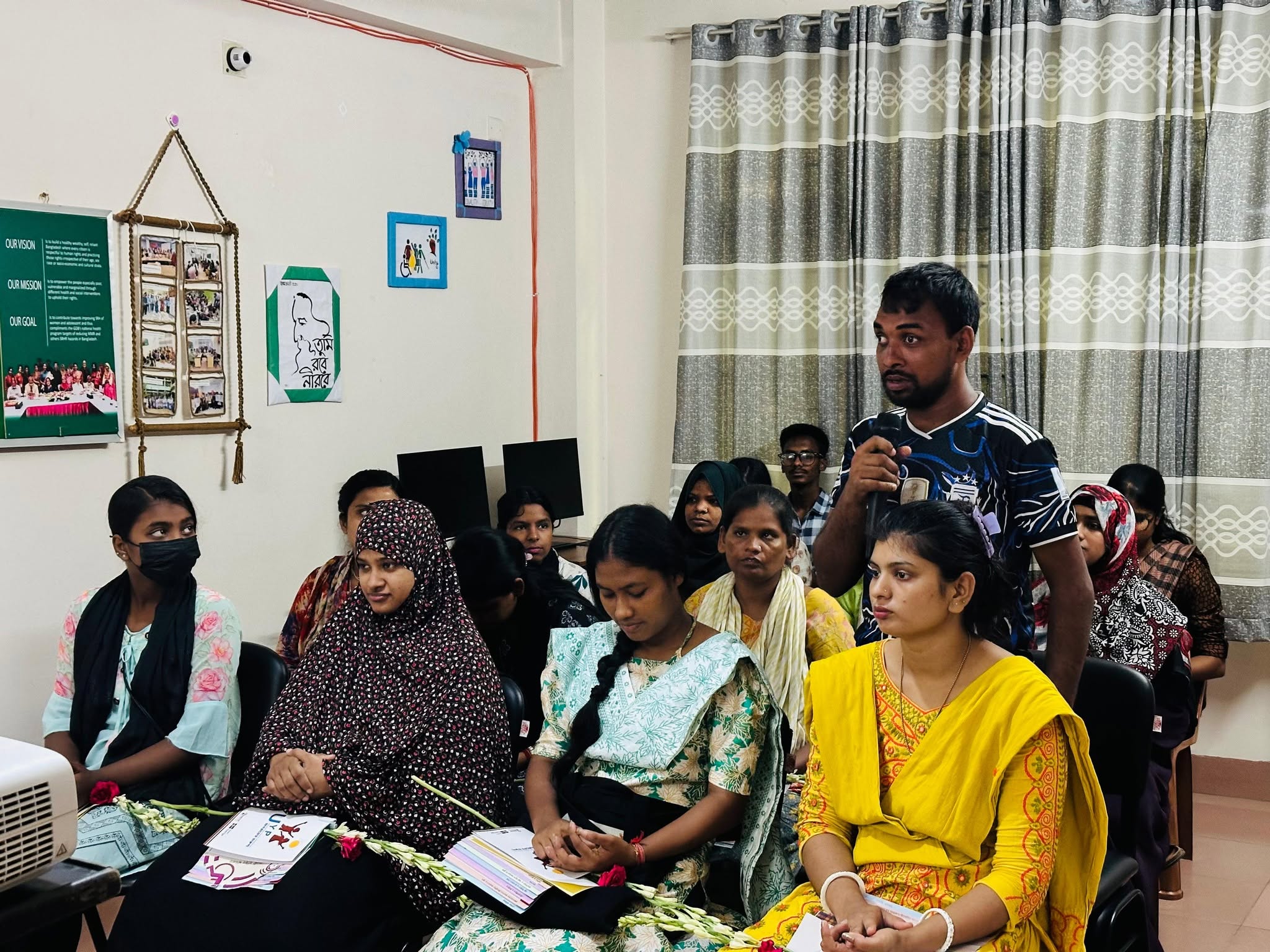
The program brought together young representatives from marginalized communities in Mymensingh, creating an inclusive platform for dialogue, knowledge sharing, and collaborative action. The event was moderated by Youth Officer Md. Ershad Mia, who welcomed the participants and invited Project Officer Resmina Haque to preside over the session. The guests and participants were warmly received by the project's advocates and mentors.
In her opening remarks, Project Officer Resmina Haque highlighted the objectives of the program and emphasized the importance of ensuring equitable access to healthcare services for marginalized populations. She reaffirmed the need for inclusive health policies that address the unique challenges faced by underserved communities.
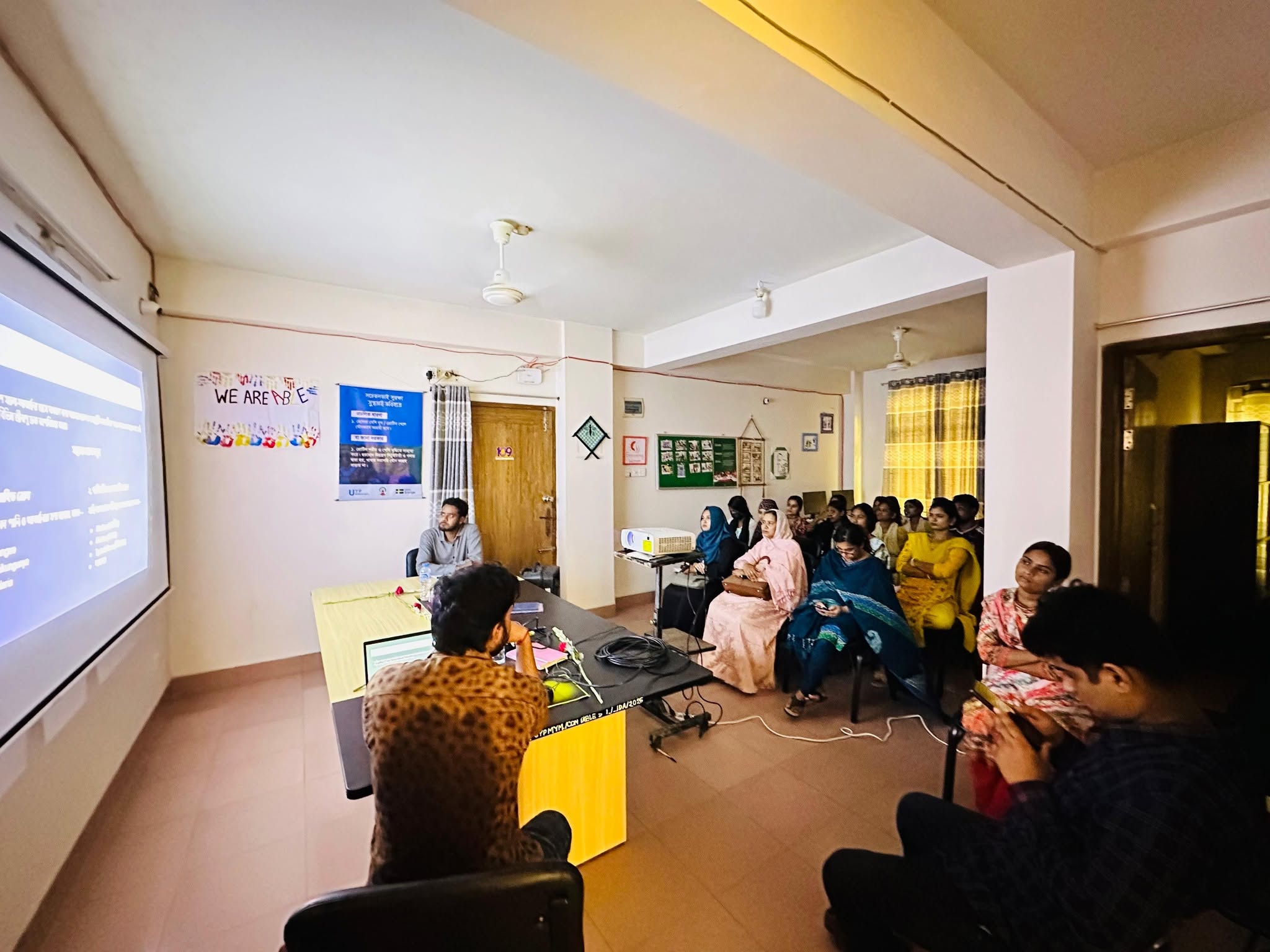
A key technical presentation was delivered by Mentor Prabhat Das, who used photographs and video footage to illustrate the current waste management situation in different communities across Mymensingh. The presentation highlighted how poor waste management and unhealthy urban environments disproportionately affect marginalized populations, increasing their exposure to health risks and environmental hazards.
The program also featured a documentary screening on Climate Change and Sexual and Reproductive Health and Rights (SRHR), providing participants with valuable insights into the growing impact of climate change on public health, reproductive health, and vulnerable communities.
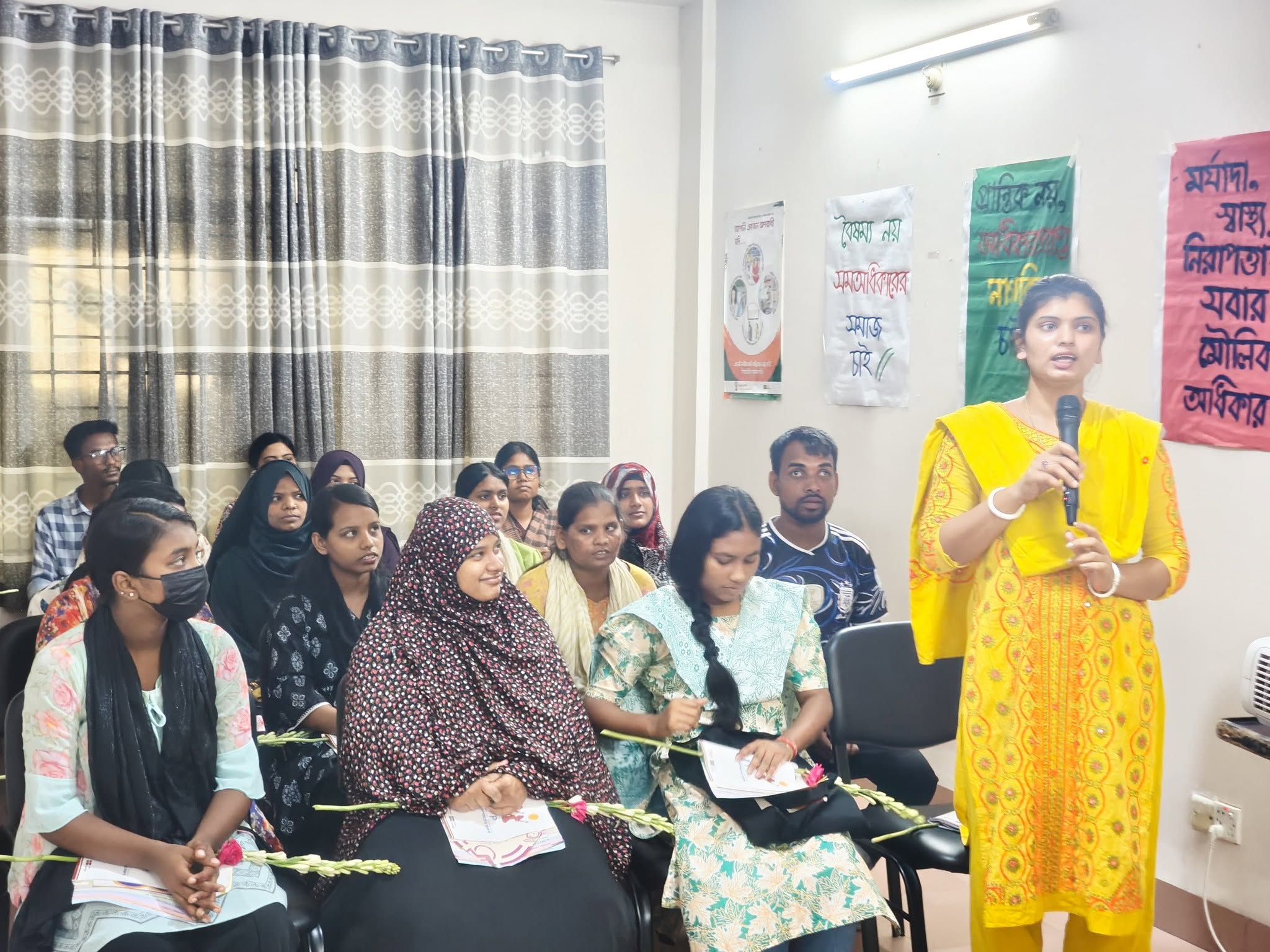
During the interactive discussion session, participants shared their experiences regarding waste management challenges within their own communities and discussed the resulting health impacts. Their active engagement encouraged meaningful dialogue on community-driven solutions and highlighted the importance of youth participation in addressing local health and environmental issues.
One of the highlights of the event was the cultural segment, where Mentor Jui and Youth Officer Md. Ershad Mia jointly presented Kazi Nazrul Islam’s Manush and the renowned song Sab Loke Koy Lalon Ki Jat Songsare by Lalon Shah. The performance beautifully conveyed the values of equality, humanity, and social inclusion, creating a memorable and inspiring atmosphere for the participants.
The program was attended by distinguished guests, including Asma Ul Husna, Upazila Family Planning Officer, Mymensingh, and Jebunnahar Jiboni, Social Mobilizer at PCC, Mymensingh. In their remarks, they emphasized the importance of coordinated efforts among government institutions, development organizations, communities, and individuals to address the health challenges faced by marginalized populations and ensure equitable access to quality healthcare services.
The session concluded with closing remarks from Project Officer Resmina Haque, who summarized the key discussions and encouraged participants to continue advocating for health equity, environmental sustainability, disability inclusion, and Sexual and Reproductive Health and Rights (SRHR) within their respective communities.
The program reaffirmed RHSTEP’s continued commitment to empowering marginalized communities through the Aporajeyo Tarunno (UYP) project by promoting inclusive health governance, youth leadership, climate resilience, and rights-based healthcare, contributing to a more equitable and sustainable Bangladesh.
Event Gallery