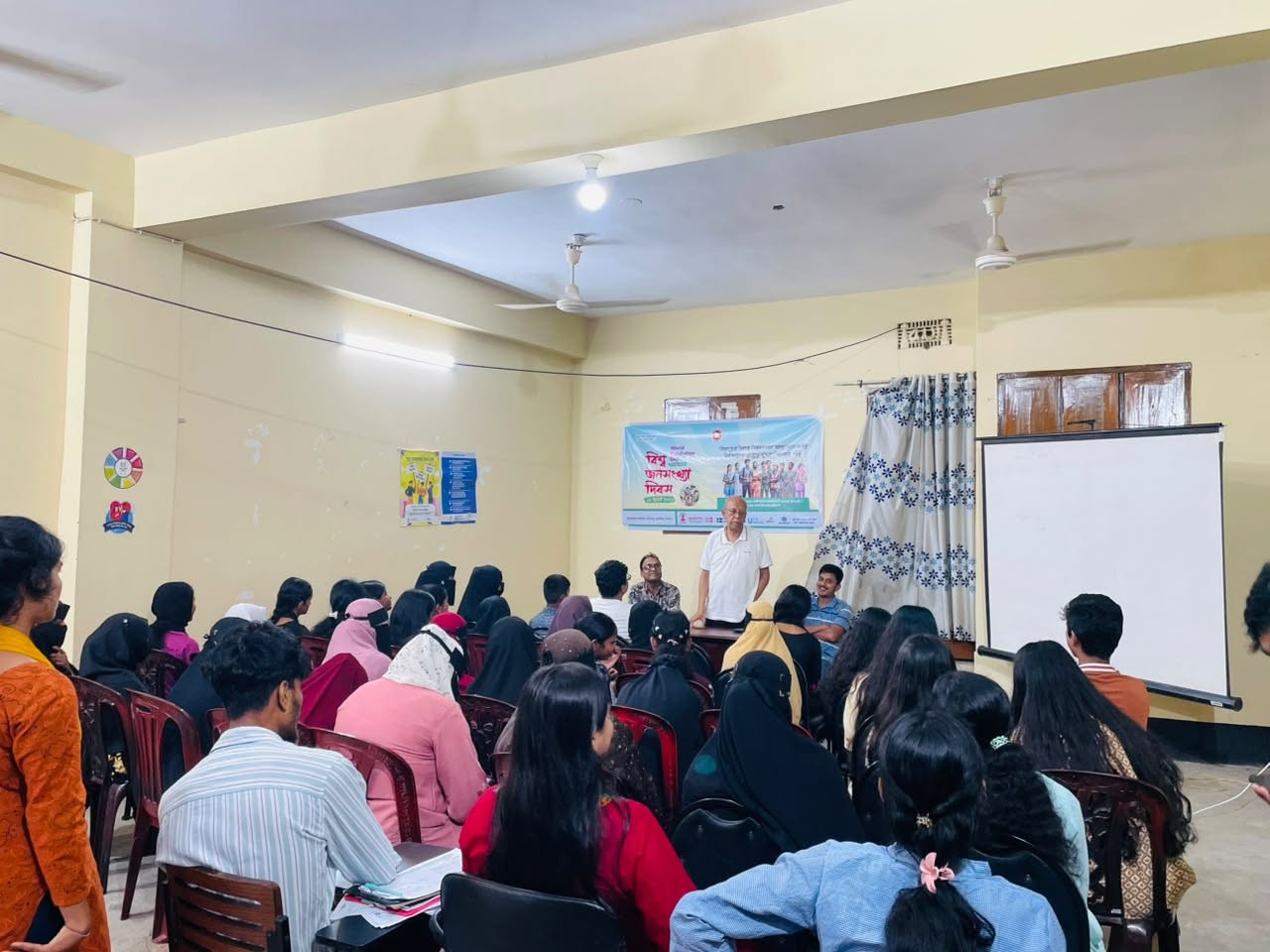
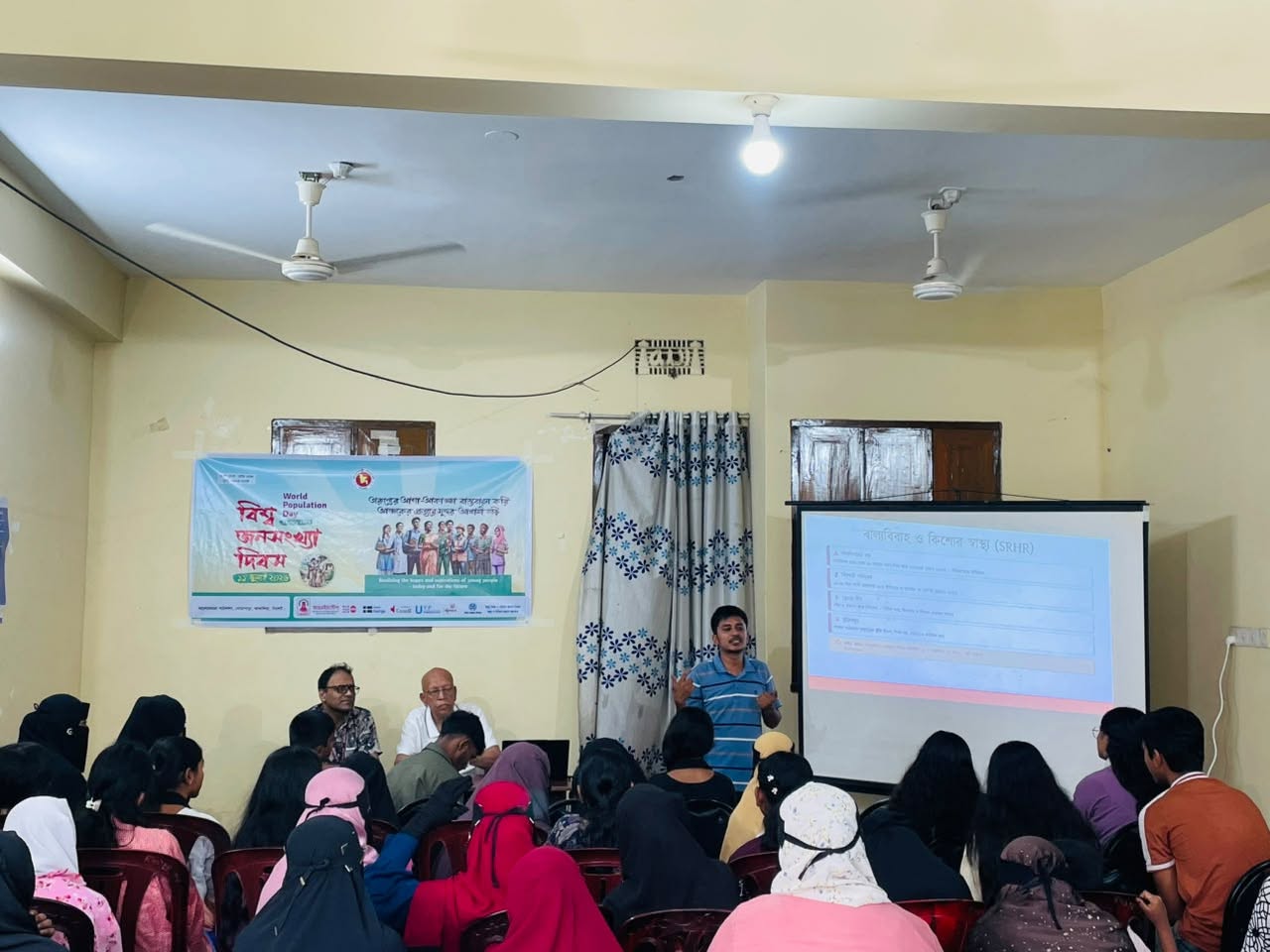
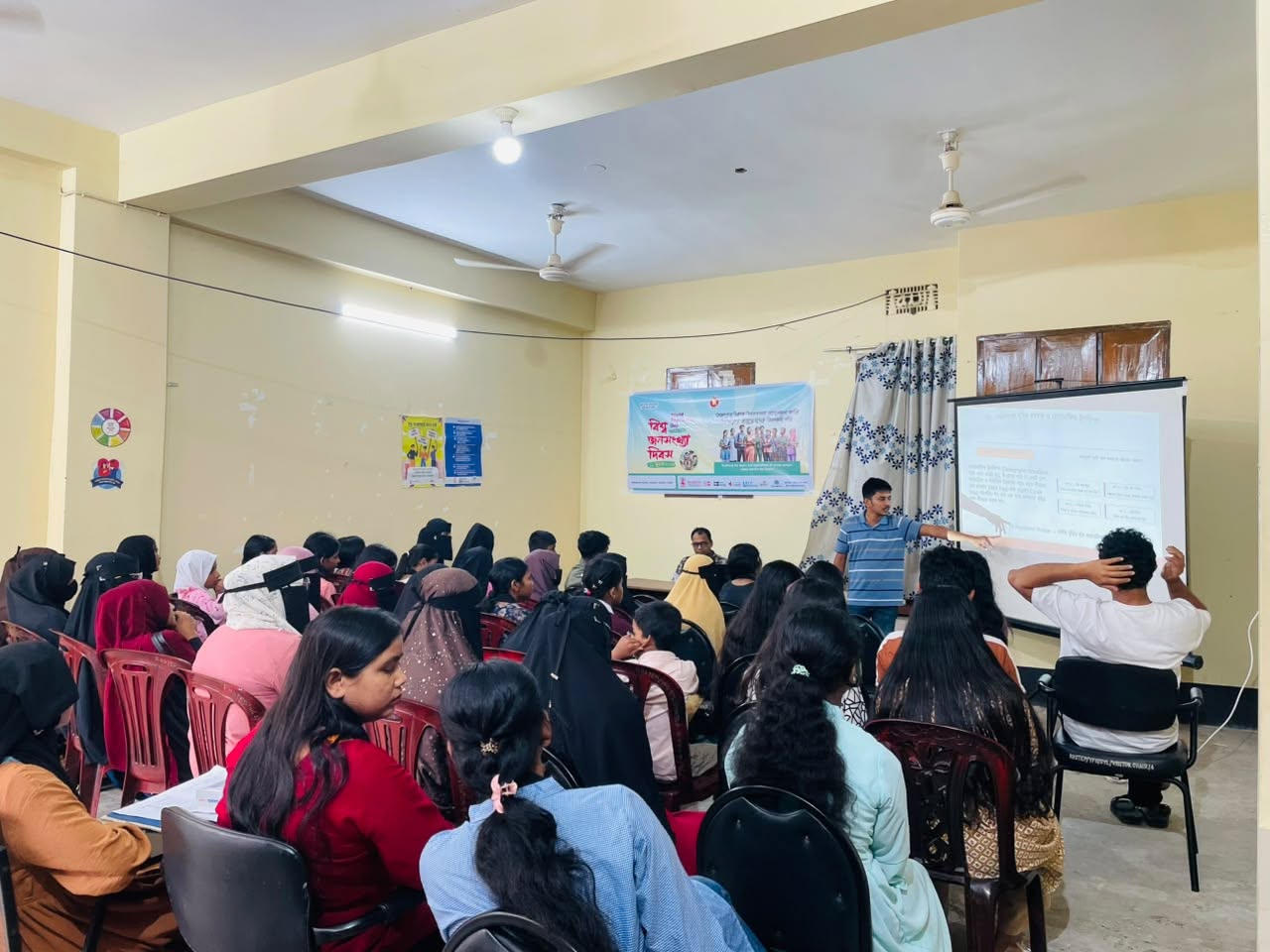
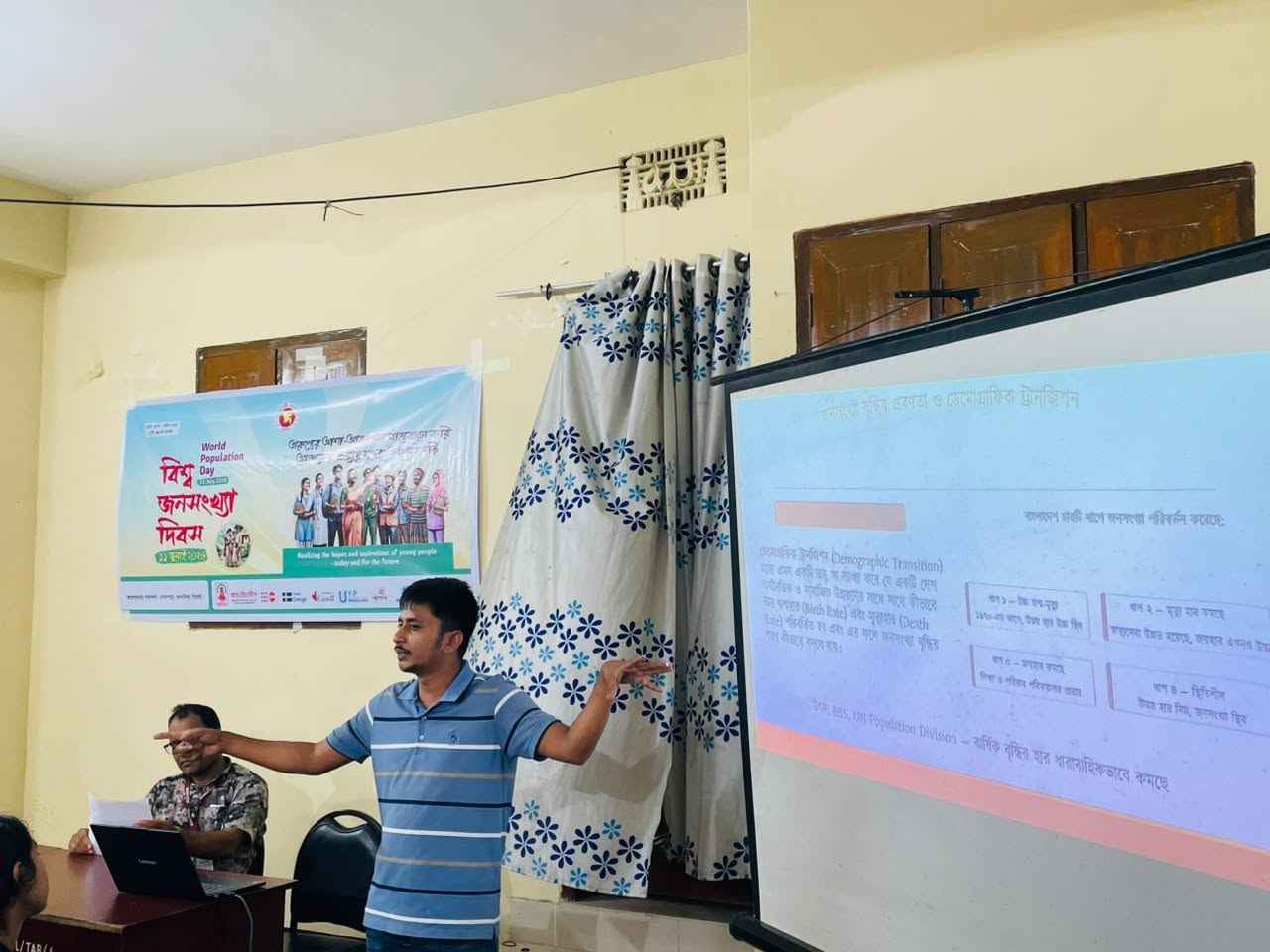
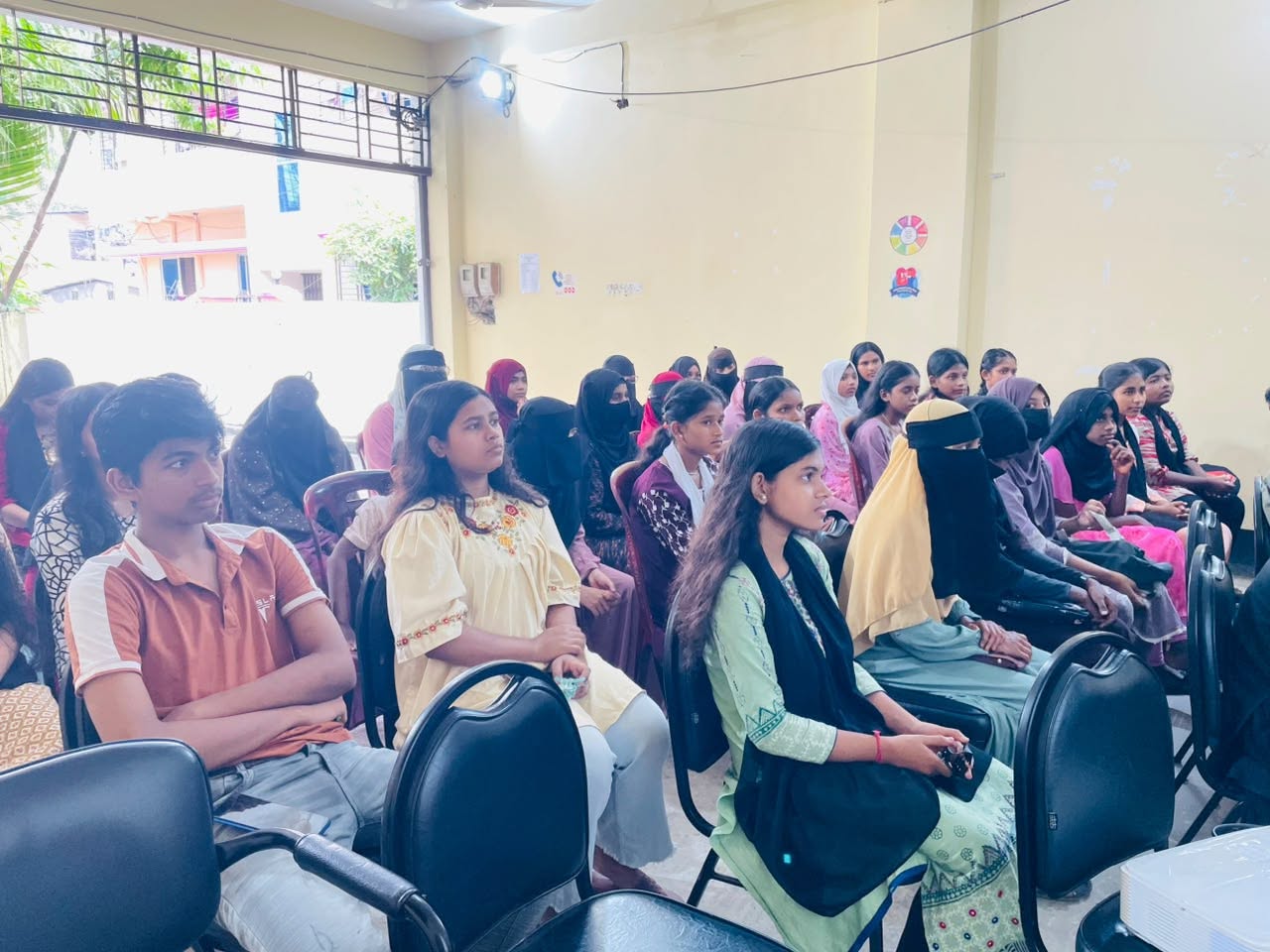
To mark World Population Day 2026, the Reproductive Health Services, Training and Education Program (RHSTEP), through its Aparajeyo Tarunno (Unlocking Youth Potential-UYP), Sylhet Unit, organized an awareness and discussion session on 11 July 2026 (Saturday) at Alor Dhara Pathshala.
The session brought together more than 50 adolescents and young people, creating an engaging platform for learning, discussion, and participation around population dynamics, health, sustainable development, and the role of young people in shaping Bangladesh’s future.
The program was chaired by Nihar Ranjan Das, Unit Manager of RHSTEP Sylhet Unit, while Mehedi Hasan, Project Officer of Aparajeyo Tarunno, Sylhet, served as the key resource person. The session was conducted from 10:00 AM to 1:00 PM, focusing on important issues related to population and sustainable development in line with the theme of World Population Day 2026.
Through an informative presentation, participants were introduced to Bangladesh’s current demographic situation and the importance of population-related issues in national development. The discussion highlighted initiatives aimed at reducing maternal and child mortality, as well as the critical role of investment in the health sector in achieving the Sustainable Development Goals (SDGs).
Particular emphasis was placed on the importance of transforming adolescents and young people into a skilled, healthy, and productive human resource. The session explored strategies for effectively utilizing Bangladesh’s demographic dividend and highlighted how appropriate investment in youth health, education, skills, and opportunities can contribute to long-term national development.
The participants also engaged in an extensive discussion on the health, social, and economic consequences of child marriage. The importance of accessible adolescent-friendly healthcare, quality education, awareness, and informed decision-making was highlighted as essential for building a healthier, more skilled, and productive generation of young people.
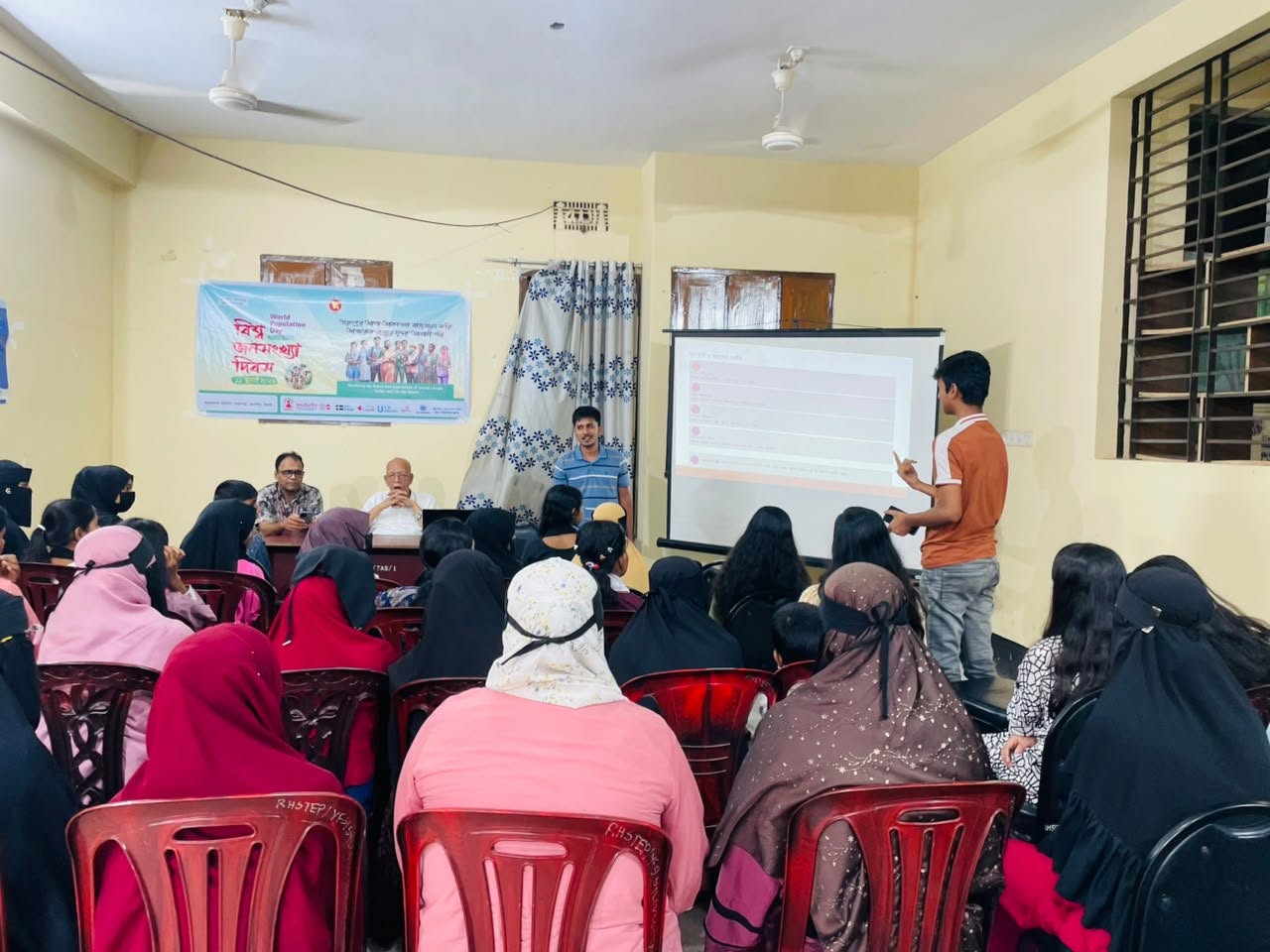
The program also used interactive activities to encourage active participation. Following the discussion, a lively quiz competition was organized, allowing participants to test and reinforce their knowledge of population, health, development, and related issues.
A participatory group work session was subsequently conducted, where participants worked collaboratively to identify their responsibilities and develop ideas for future actions related to population issues, health promotion, and child marriage prevention. Each group presented its ideas and proposed actions, providing young participants with an opportunity to express their perspectives and demonstrate their leadership and problem-solving skills.
The enthusiastic participation of the adolescents and young people made the session both engaging and meaningful. The program highlighted the importance of empowering young people with knowledge, skills, and opportunities to become active contributors to sustainable development.
Through initiatives like this, Aparajeyo Tarunno continues to promote youth engagement, health awareness, informed decision-making, and leadership development while encouraging young people to play a meaningful role in building a healthier, more equitable, and sustainable future.
Event Gallery