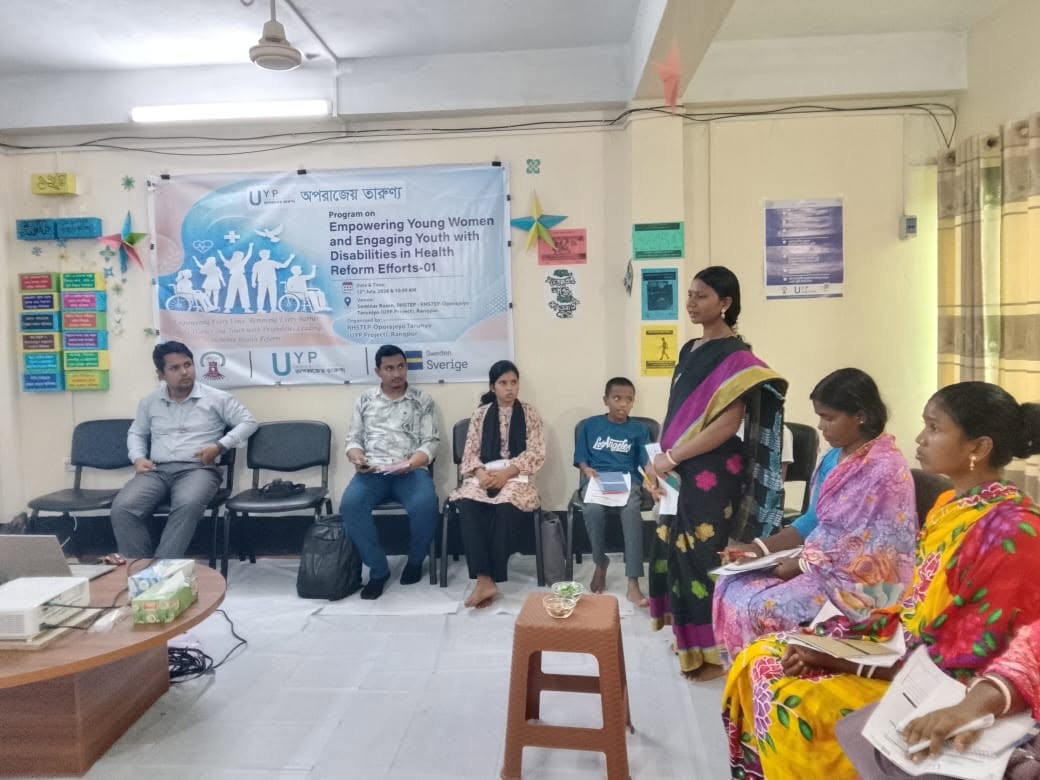
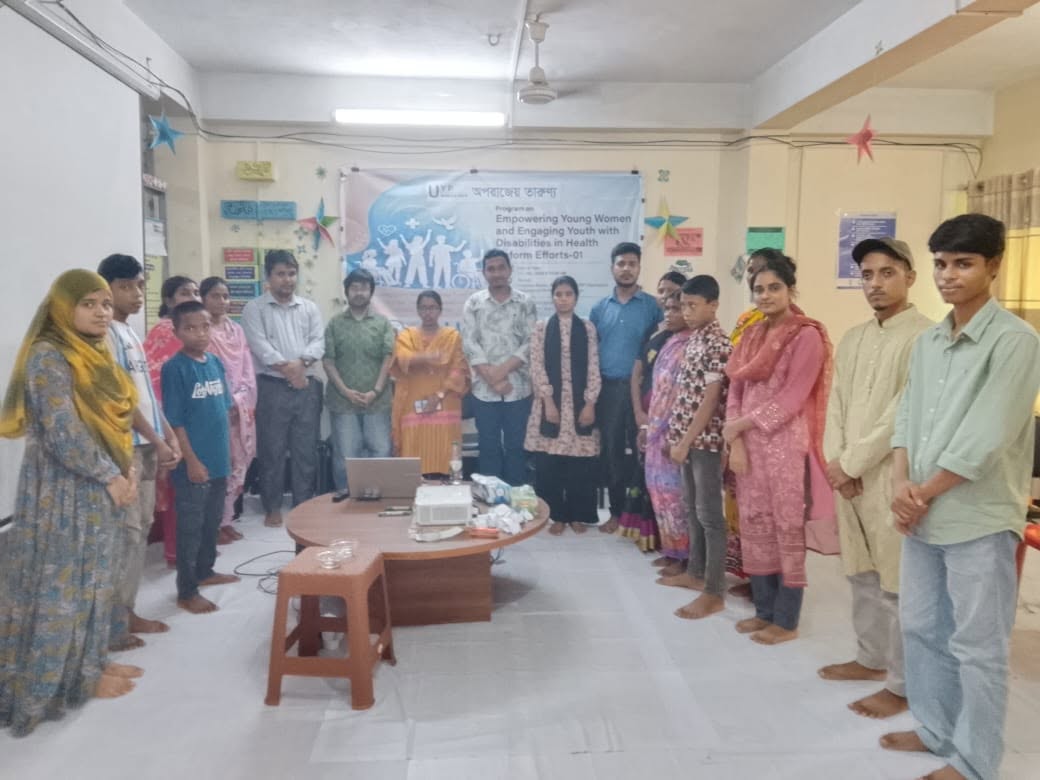
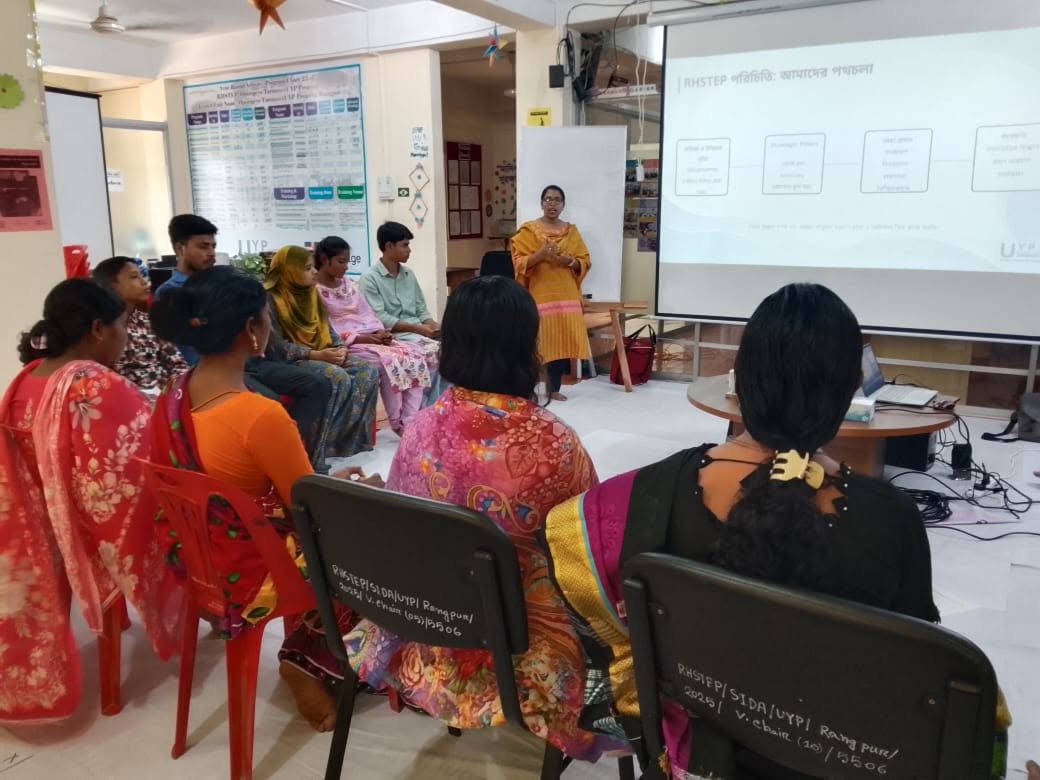
On 12 July 2026 at 10:30 AM, RHSTEP’s Aparajeyo Tarunno, Rangpur Branch, organized a discussion and participatory program focused on empowering young women and ensuring the meaningful participation of young people with disabilities in health sector reform.
The program brought together young people, representatives of persons with disabilities, and relevant stakeholders to discuss the importance of inclusive participation in developing a more accessible, equitable, accountable, and people-centered healthcare system.
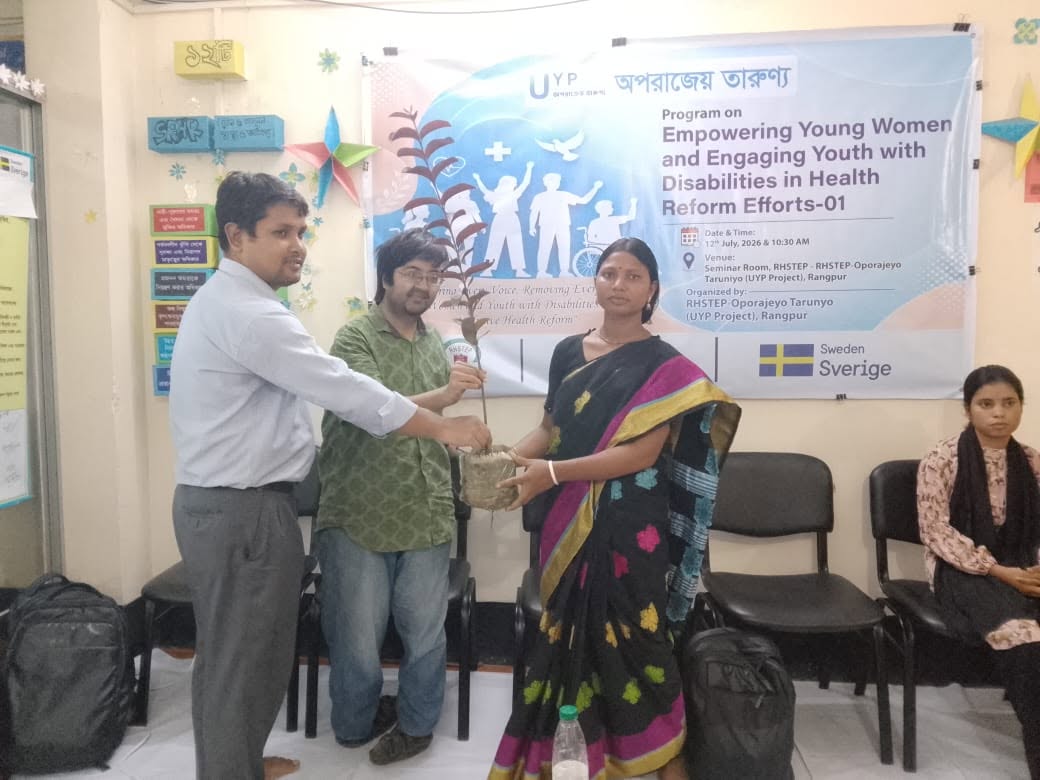
The chief guest was Dipika Biswas, Lecturer in the Department of Sociology at Begum Rokeya University, while Ahsan Habib, Director of Rangpur Disabled Association, attended as the special guest. The program was chaired by Animesh Roy, Project Officer of Aparajeyo Tarunno Rangpur, and moderated by Swarnali Acharya, Youth Officer of Aparajeyo Tarunno Rangpur.
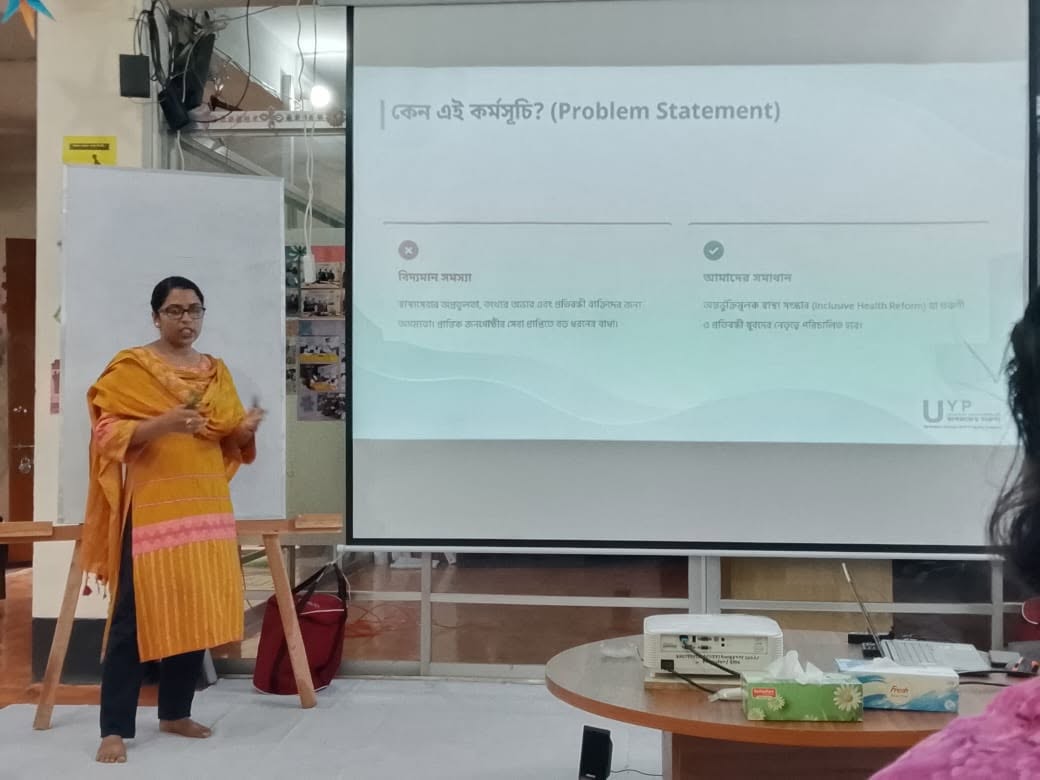
In her keynote remarks, Dipika Biswas emphasized that the active participation of young people—particularly young women and young people with disabilities—is essential for building an effective and sustainable health system. She explained that health sector reform should extend beyond infrastructure development and service expansion and should include meaningful public participation at every stage of policy development, planning, implementation, and evaluation.
She further highlighted the role of young women as important drivers of social change. Greater opportunities for young women to exercise leadership, develop skills, and participate in decision-making can help make healthcare services more accountable, equitable, responsive, and people-centered.
She also emphasized the importance of incorporating the experiences and needs of young people with disabilities into healthcare planning. Giving their voices meaningful consideration can contribute to developing an inclusive health system that follows the principle of “leaving no one behind.”
Special guest Ahsan Habib highlighted that access to healthcare is a fundamental right of persons with disabilities. However, many people with disabilities continue to face barriers related to physical infrastructure, access to information, communication systems, and service delivery.
He stressed that people with disabilities—particularly young people—must be recognized as active partners in every health sector reform initiative. He also emphasized the need to increase disability sensitivity among healthcare professionals, improve accessibility at healthcare facilities, and ensure non-discriminatory services for everyone.
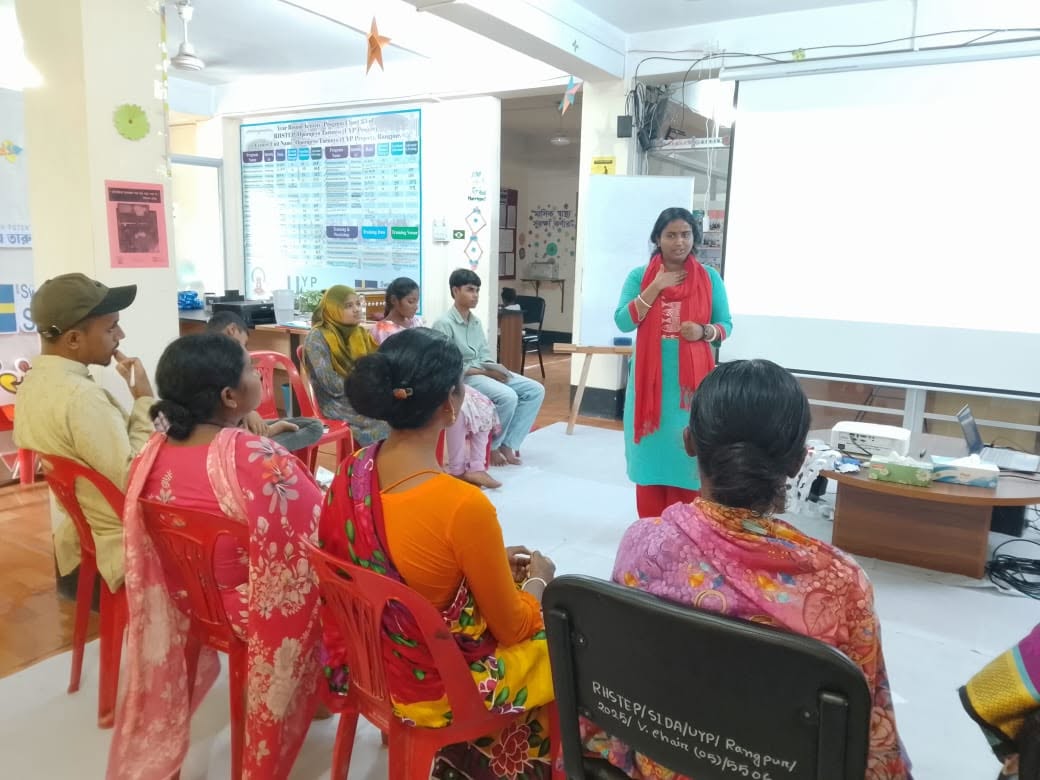
An important part of the program was a creative participatory session facilitated by Mentor Ruman. Through group discussions and collaborative activities, participants explored opportunities for young women and young people with disabilities to participate in health sector reform. They identified existing challenges and proposed potential solutions for strengthening meaningful participation and inclusion.
The session created a space for participants to share their experiences, perspectives, and recommendations while encouraging them to think critically about how young people can contribute to improving healthcare systems and policies.
In his closing remarks, Animesh Roy, Project Officer of Aparajeyo Tarunno Rangpur, emphasized that meaningful youth participation is essential for building a sustainable and accountable healthcare system. He particularly highlighted the importance of ensuring that the voices and perspectives of young women and young people with disabilities are recognized and valued in health-related decision-making.
The program brought together young people, disability representatives, and relevant stakeholders who expressed their commitment to contributing actively to the development and implementation of inclusive policies and initiatives in the health sector.
Through dialogue, creative participation, and experience sharing, the program reinforced the importance of youth leadership, women’s empowerment, disability inclusion, and meaningful public participation in health sector reform and in building a more equitable healthcare system for all.
Event Gallery