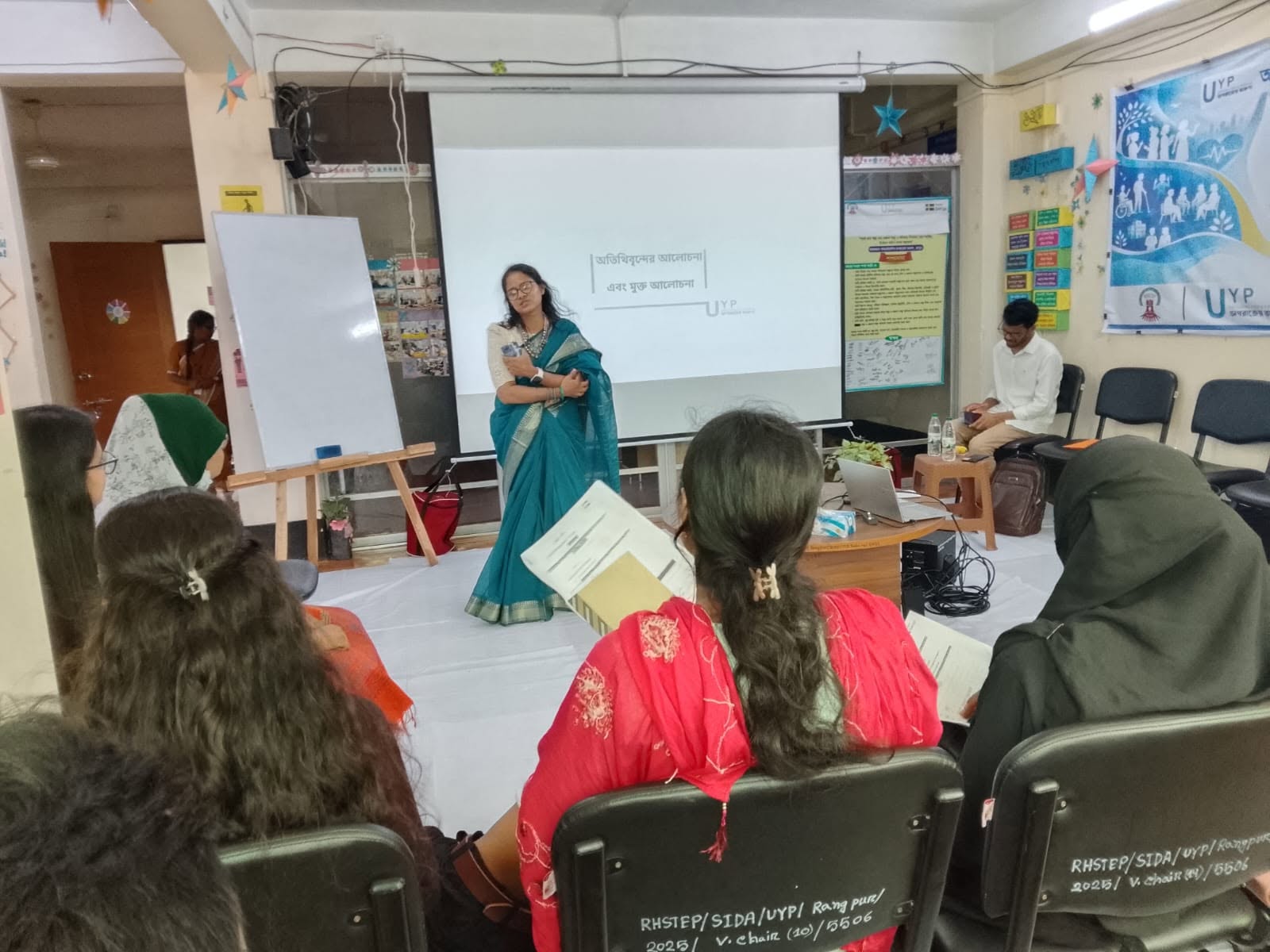
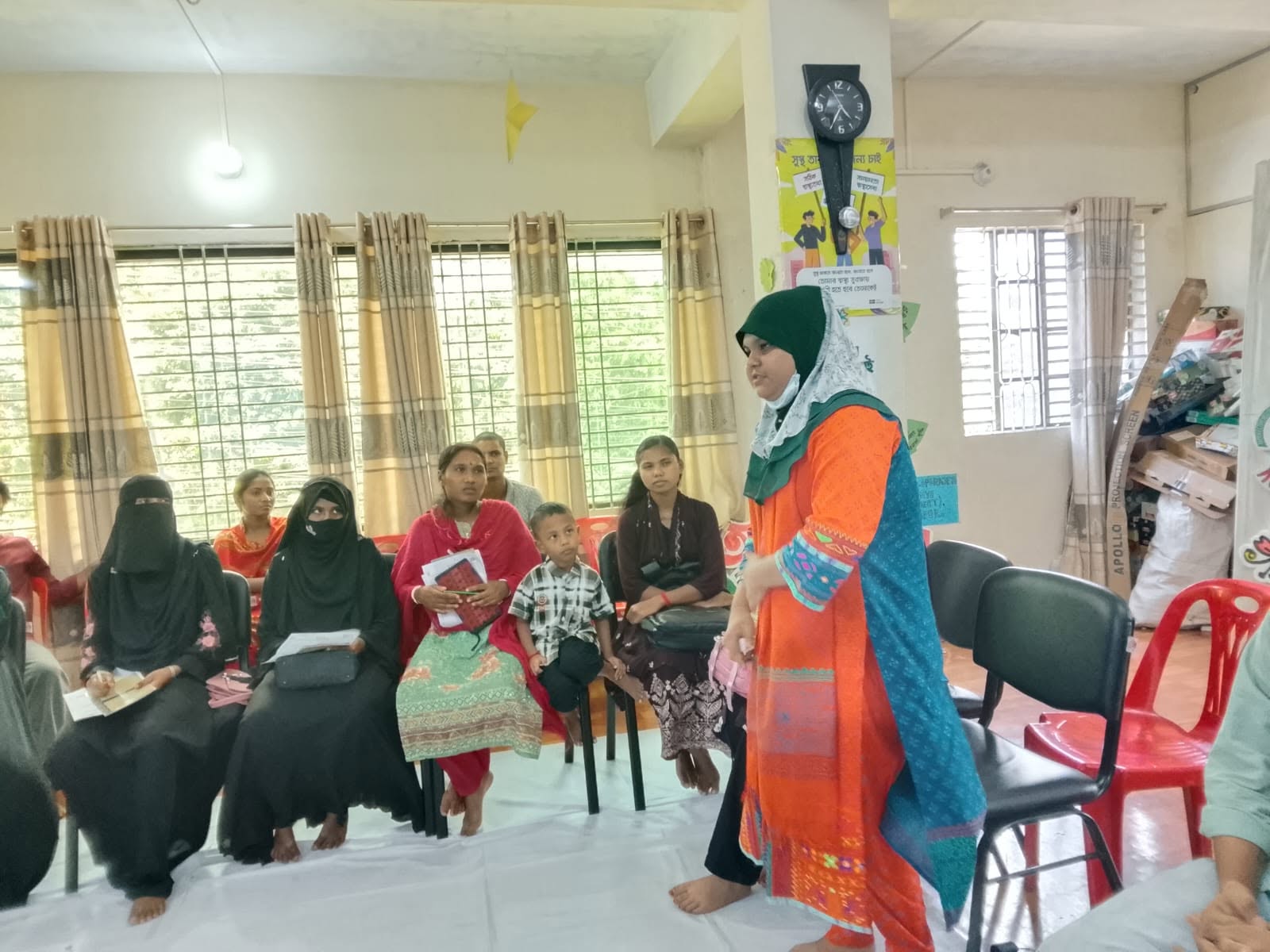
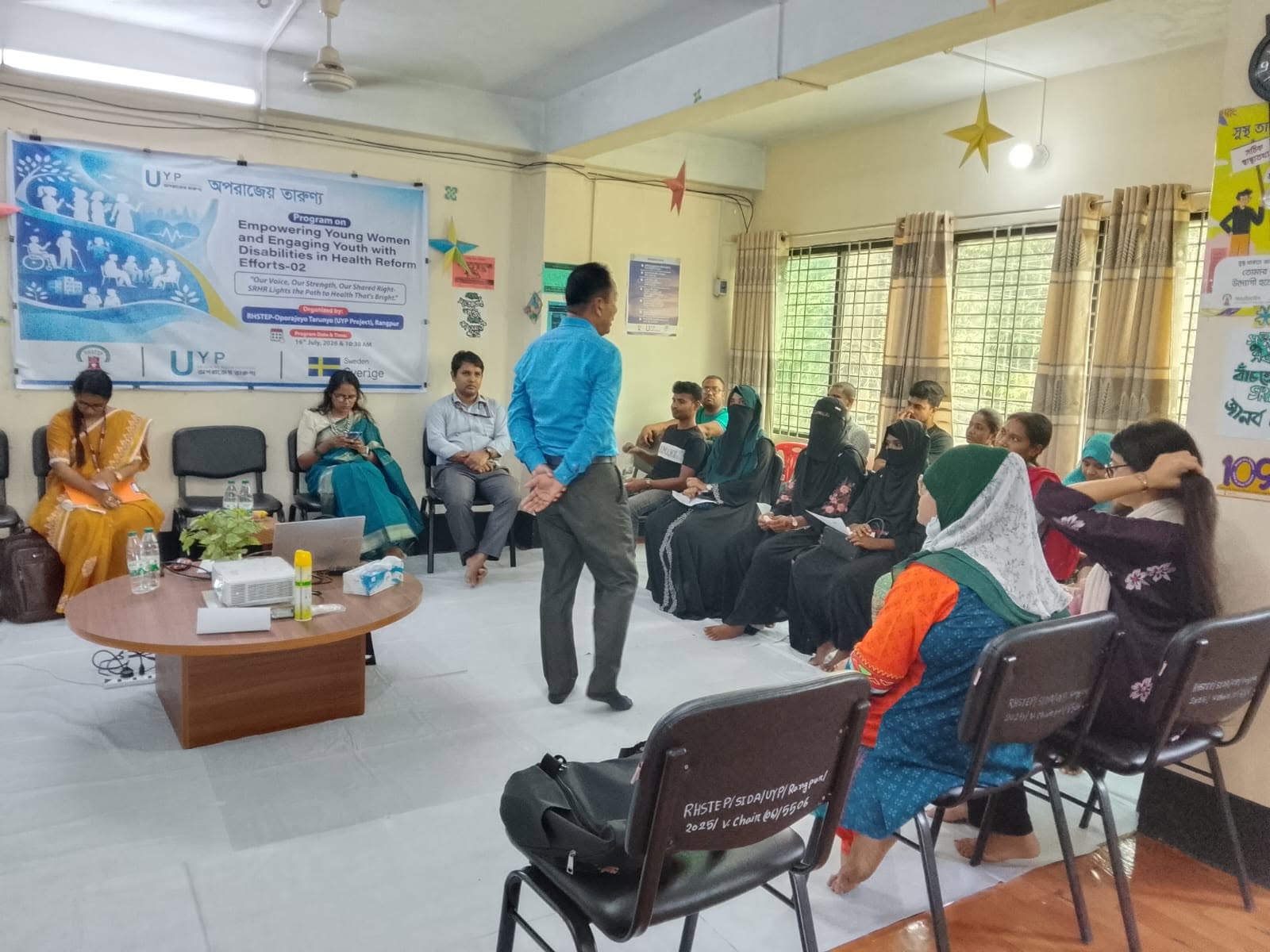
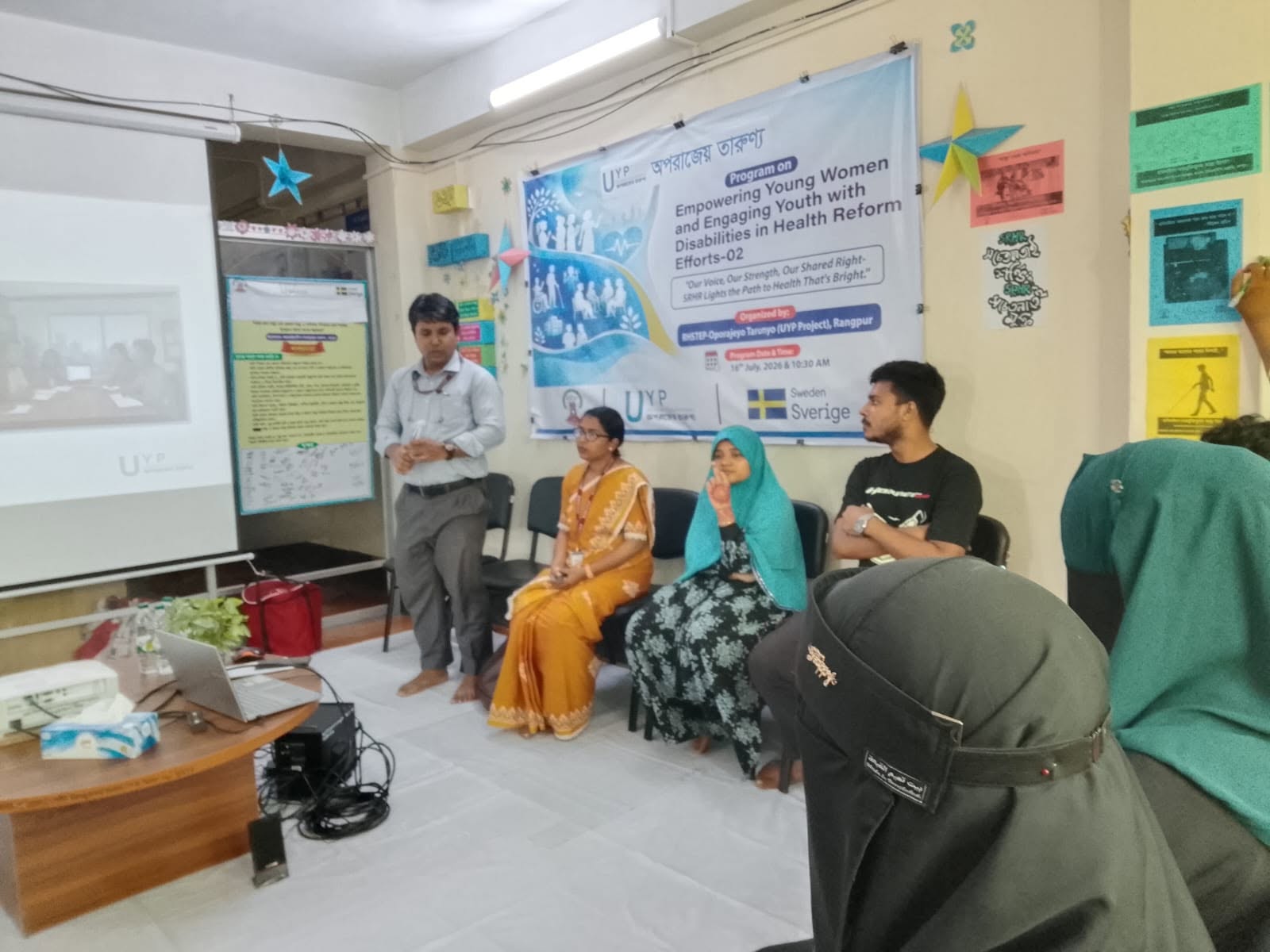
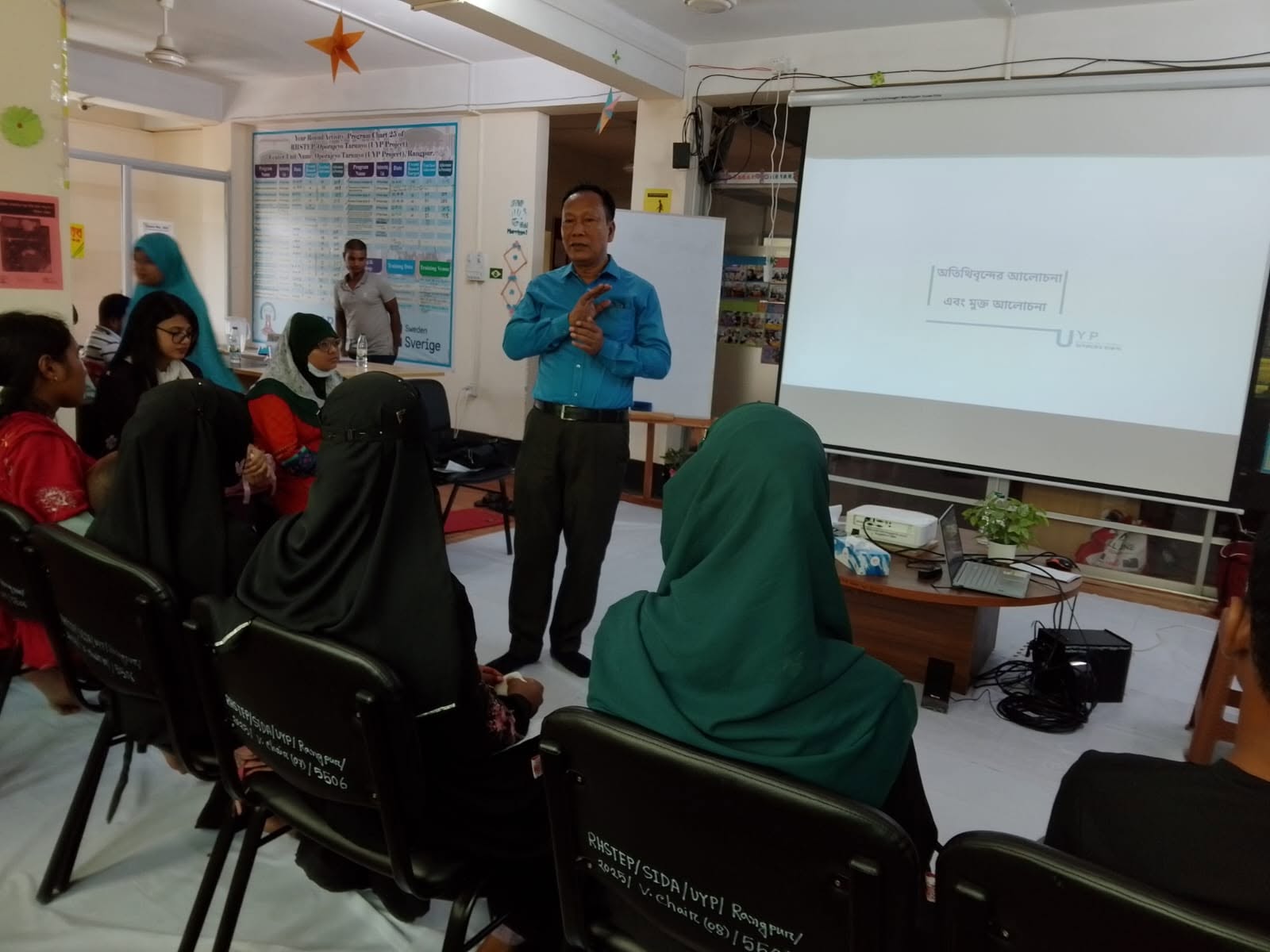
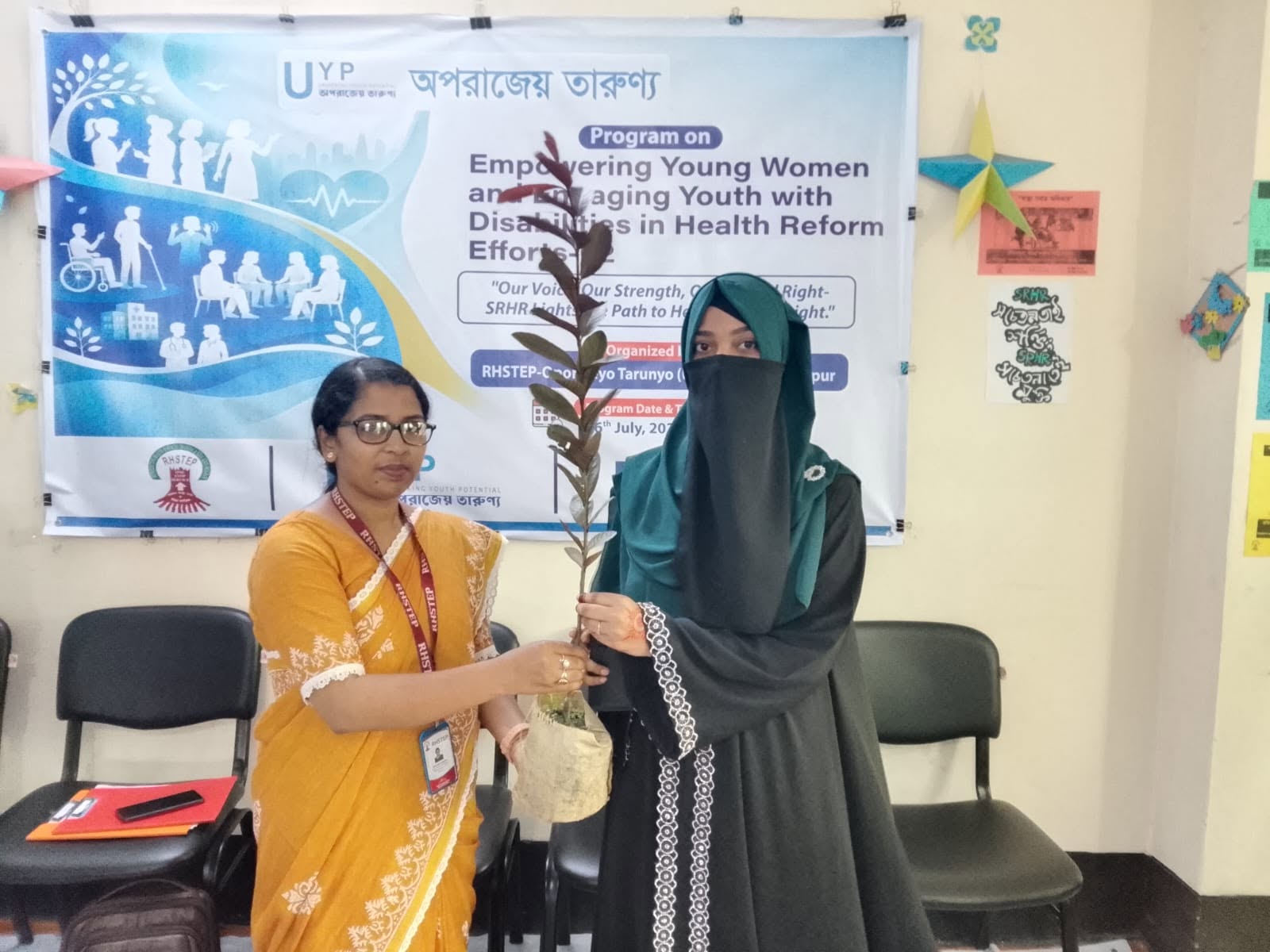
On 16 July 2026, RHSTEP’s Aparajeyo Tarunno (UYP) Rangpur Centre organized a discussion and participatory program aimed at empowering young women and ensuring the meaningful participation of youth with disabilities in health reform efforts. The program focused on strengthening inclusive participation, promoting gender equality, and ensuring that the experiences, needs, and perspectives of young people are reflected in health sector planning and decision-making.
The program was attended by Aniruddha Kumar Roy, Deputy Director, District Social Services Office, as the Chief Guest, while Ishrat Jahan Ishita, Regional Manager, Gender Justice and Diversity Program, BRAC, joined as the Special Guest.
In his keynote remarks, Aniruddha Kumar Roy emphasized that meaningful participation from every section of society is essential to building a humane, equitable, and sustainable healthcare system. He highlighted the importance of creating an enabling environment where young women and youth with disabilities can effectively communicate their needs, experiences, and perspectives at policy and decision-making levels.
He further noted that healthcare is not merely about receiving medical treatment; it is closely connected with dignity, equal opportunity, social justice, and fundamental rights. He stressed that coordinated efforts between government and non-government organizations can significantly contribute to ensuring more inclusive and accessible healthcare services.
Special Guest Ishrat Jahan Ishita highlighted the importance of integrating gender equality and diversity into health sector reform initiatives. She emphasized that long-term and meaningful health reform cannot be achieved without addressing the needs of women, persons with disabilities, marginalized communities, and other diverse groups.
She also stressed the need to ensure safe, non-discriminatory, accessible, and inclusive healthcare services for all. According to her, strengthening youth leadership, increasing awareness, and expanding participatory initiatives at the local level can make the health sector more responsive and people-centered. She called upon all relevant stakeholders to work together to advance these goals.
As part of the program, Mentor Ruman facilitated a participatory creative session. Participants were divided into groups to discuss the current state of participation of young women and youth with disabilities in health reform, identify existing barriers, and develop practical solutions.
The group discussions placed particular emphasis on inclusive policy development, gender-responsive healthcare, disability-friendly health facilities, meaningful youth participation, and greater representation of marginalized groups in decision-making processes. Participants had the opportunity to share their experiences, exchange perspectives, and identify ways to strengthen the role of young people in health sector reform.
The program was chaired by Animesh Roy, Project Officer, Aparajeyo Tarunno Rangpur Centre. In his concluding remarks, he emphasized that successful health sector reform requires not only increased youth engagement but also greater opportunities for young women and youth with disabilities to develop leadership skills and participate meaningfully in decision-making processes.
He further stated that building an accountable, non-discriminatory, and inclusive healthcare system is possible only when all sections of society are included in the process.
The session was facilitated by Swarnali Acharya, Youth Officer, Aparajeyo Tarunno Rangpur Centre. Young people, representatives of persons with disabilities, and other relevant stakeholders actively participated in the program.
At the conclusion of the discussion, participants expressed their commitment to promoting inclusive policies, strengthening youth leadership, and advancing equitable and accessible healthcare services as part of ongoing health reform efforts.
Event Gallery